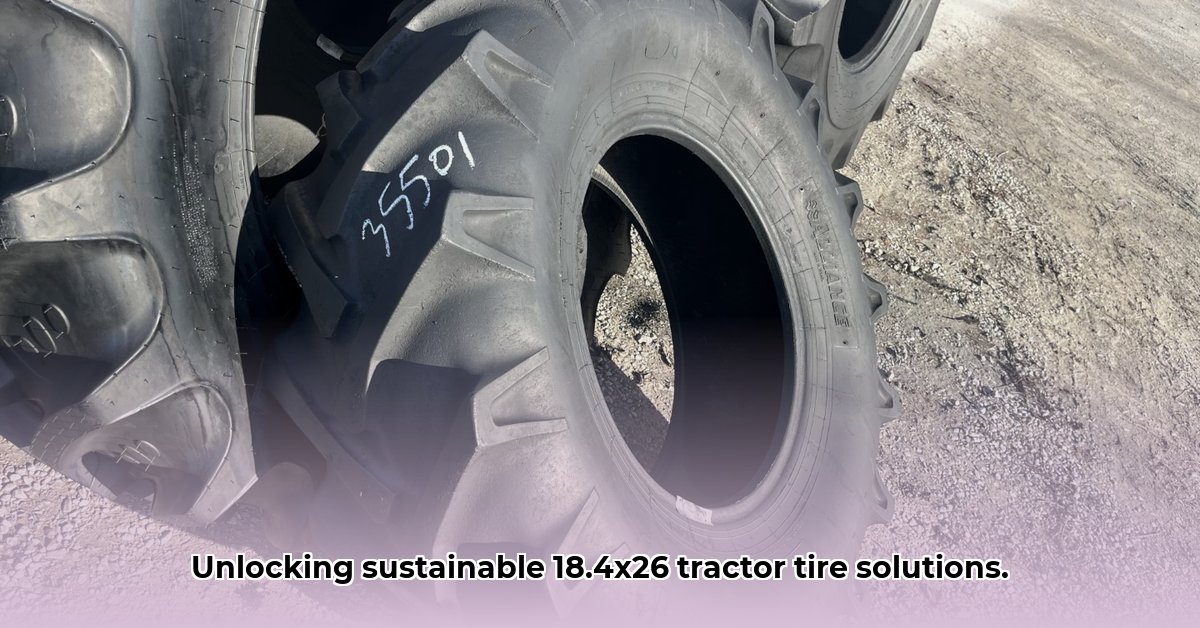
The 18.4x26 Tractor Tire Market: A Growing Need for Sustainable Solutions
The ubiquitous 18.4x26 tractor tire is a cornerstone of modern agriculture, enabling efficient farming practices worldwide. Yet, the lifecycle of these massive tires presents significant environmental challenges. This article delves into the complexities of the 18.4x26 tractor tire market, examining current market dynamics, sustainability issues, and actionable strategies for a greener future. From fluctuating prices on platforms like eBay to the burgeoning market for retreaded tires, the 18.4x26 tire market reveals a complex interplay of supply, demand, and environmental responsibility. But how can we ensure the continued productivity of our farms without sacrificing the health of our planet? For information on other tire sizes, see our guide on different tractor tire sizes.
Market Overview: Balancing Demand and Supply Chain Challenges
Demand for 18.4x26 tractor tires remains robust, driven by the continued growth of global agricultural production. Online marketplaces like eBay showcase a brisk trade in both new and used tires, reflecting substantial farmer demand. However, price variations observed across different retailers – including dedicated tire stores like Pete's Tire Barn – underscore challenges within the supply chain. These fluctuations create uncertainty for farmers budgeting for essential equipment, highlighting the need for greater transparency and market stability. The question remains: How can we streamline the supply chain to provide farmers with consistently priced, reliable tires?
Environmental Impact: The Unsustainable Reality of Tire Disposal
The environmental footprint of 18.4x26 tractor tires is substantial, extending from manufacturing to disposal. The production process consumes significant resources, generating greenhouse gas emissions. Moreover, the sheer volume of discarded tires contributes substantially to landfill waste, causing soil and groundwater contamination. However, the picture isn't entirely bleak. Retreading (re-treading worn tires) significantly extends their lifespan, thus reducing the demand for new tires and minimizing waste. Recycling also presents an opportunity to transform discarded tires into new products, effectively diverting waste from landfills. The challenge lies in scaling up these solutions to address the volume of discarded tires effectively. How can we bridge the gap between existing sustainability solutions and meeting the massive demand?
Stakeholder Perspectives: A Collaborative Approach to Sustainability
Addressing the sustainability challenges of 18.4x26 tractor tires requires a collaborative effort among various stakeholders. Tire manufacturers can lead by integrating sustainable materials into production processes and investing in improved recycling technologies. Farmers play a crucial role by adopting more efficient tire management practices, which could include regularly monitoring tire pressure and exploring retreading options. Governments can incentivize sustainable practices through policy changes, including tax breaks for recycling and stricter regulations on landfill disposal. Finally, recyclers must invest in advanced technologies to improve efficiency and expand their capacity to handle the large volume of discarded tires. What specific actions can each stakeholder take to drive change rapidly?
Actionable Steps Towards Sustainable Tire Management
Several practical steps can significantly enhance the sustainability of the 18.4x26 tractor tire lifecycle:
Enhanced Supply Chain Transparency: Increased transparency in manufacturing processes, materials sourcing, and environmental impact assessments will provide a clearer understanding of the overall lifecycle costs. This also allows for more informed purchasing decisions from farmers.
Innovation in Tire Materials: Research and development should prioritize the development of sustainable materials, including bio-based alternatives and recycled rubber, for use in tire production.
Improved Recycling Infrastructure: Investments in advanced tire-recycling technologies and expansion of recycling facilities are essential to manage the waste stream efficiently. Government incentives can expedite this process.
Farmer Engagement and Education: Educating farmers about best practices for tire management, including regular pressure checks, proper inflation techniques, and the benefits of retreading can make a considerable difference.
Proactive Government Policies: Government policies should encourage the adoption of sustainable practices, including financial incentives for recycling, stringent regulations on illegal dumping, and investment in research and development.
The Future of 18.4x26 Tractor Tires: A Sustainable Vision
The future of 18.4x26 tractor tires hinges on a collective commitment to sustainability. By fostering collaboration between manufacturers, farmers, governments, and recyclers, we can create a system where economic prosperity and environmental stewardship coexist. This involves not just technological advancements, but also a shift in mindset – from a linear "take-make-dispose" model to a circular economy that embraces recycling, reuse, and resource efficiency. The goal is clear: a future where agricultural productivity and environmental sustainability are mutually reinforcing, rather than conflicting, goals. The journey toward this future requires sustained effort, innovation and collaboration, but the potential benefits for the environment and the agricultural industry are immense.